Wednesday, May 27, 2020

May 2020 Recap: A Monthly Exercise in Critical Transparency

My opera compulsion continues. I’ve taken in streams of 68 productions in the last 67 days.  The following albums, songs and livestreams balanced my maximal intake of ostensible high culture this month.

Top Five Albums
1. Bad Bunny- Las Que No Iban a Salir
Even the Puerto Rican’s discards are thrilling.
2. Sleaford Mods- All That Glue
My review.
3. Future- High Off Life
Chart-topping nihilism.
4. Aaron Parks- Little Big II: Dreams of a Mechanical Man
Fusion lives.
5. Dinosaur- To the Earth
Laura Jurd’s lawless group careens into the center lane.

Top Five Songs
1. Little Simz- “Might Bang, Might Not”
Oh, it bangs all right.
2. 6ix9ine- “Gooba”
I know, I know.  As the hooligan suggests, I must be “dumb, stupid or dumb.”
3. Shirley Collins- “Wondrous Love”
Selah.
4. The Magnetic Fields- “Favorite Bar”
Gloriously droll.
5. Hot Country Knights- “Then It Rained”
A gut-busting Garth Brooks spoof.

Top Five Livestreams
1. Bang on a Can Marathon
The online version of the canceled festival featured appearances by luminaries including Meredith Monk.
2. KC Bands Together
Full disclosure- I’m listed in the closing credits.
3. Bill Frisell- Blue Note at Home
The guitarist’s apartment has a better vibe than the venue.
4. Century Media’s Isolation Festival
Dead Lord was among the metal bands bringing the vital noise.
5. Molly Hammer- Jazzy Jamdemic
Classic Kansas City.

(I conducted the same exercise in April, March, February and January.

(Screenshot of the Metropolitan Opera’s production of Nico Muhly’s "Marnie" by There Stands the Glass.)

Wednesday, May 20, 2020

What I Learned From Having Died

I’ve watched streams of entire operas for 61 consecutive days.  I finished a hideous three-hour-and-43-minute 1986 production of Richard Wagner’s “Lohengrin” this morning.  The strenuous process altered my ears.  Out for Stars, a challenging album by an Amsterdam based octet overseen by the Slovenian pianist Kaja Draksler, would have almost certainly have struck me as overly precious and exceedingly cacophonous just two months ago.  The scratchy recording sets the poems of Robert Frost to avant-garde chamber music.  While vocalists Björk Níelsdóttir and Laura Polence mimic operatic singing on “The Silken Tent,” their approach is more often in line with experimental folk ensembles.  Based on Robert Frost’s “A Passing Glimpse,” “Danas, Jučer, Sutra” reduces my opera-traumatized psyche to a puddle.  But don’t mind me- I’m so intoxicated by the European-steeped Kool Aid that even a woefully inept and horribly out of tune saxophone solo on “Away!” pleases me.


---
Hearing Jah Wobble’s opening bass line on “Public Image” in 1978 was among the most transformative musical moments of my life.  I had a friend who sprung for Public Image Ltd.’s Metal Box a year later.  Corrosive songs like “Poptones” also modified the way I experience sound.  Almost every song by Sleaford Mods catapults me back to that era.  All That Glue, a 72-minute compilation of the group’s most popular songs and odds-and-sods, is a thrilling career summation and logical extension of PiL’s legacy.  Here’s the excellent video for “Second”.

---
I lament the conservatism of the Folly Jazz Series’ forthcoming season at Plastic Sax.

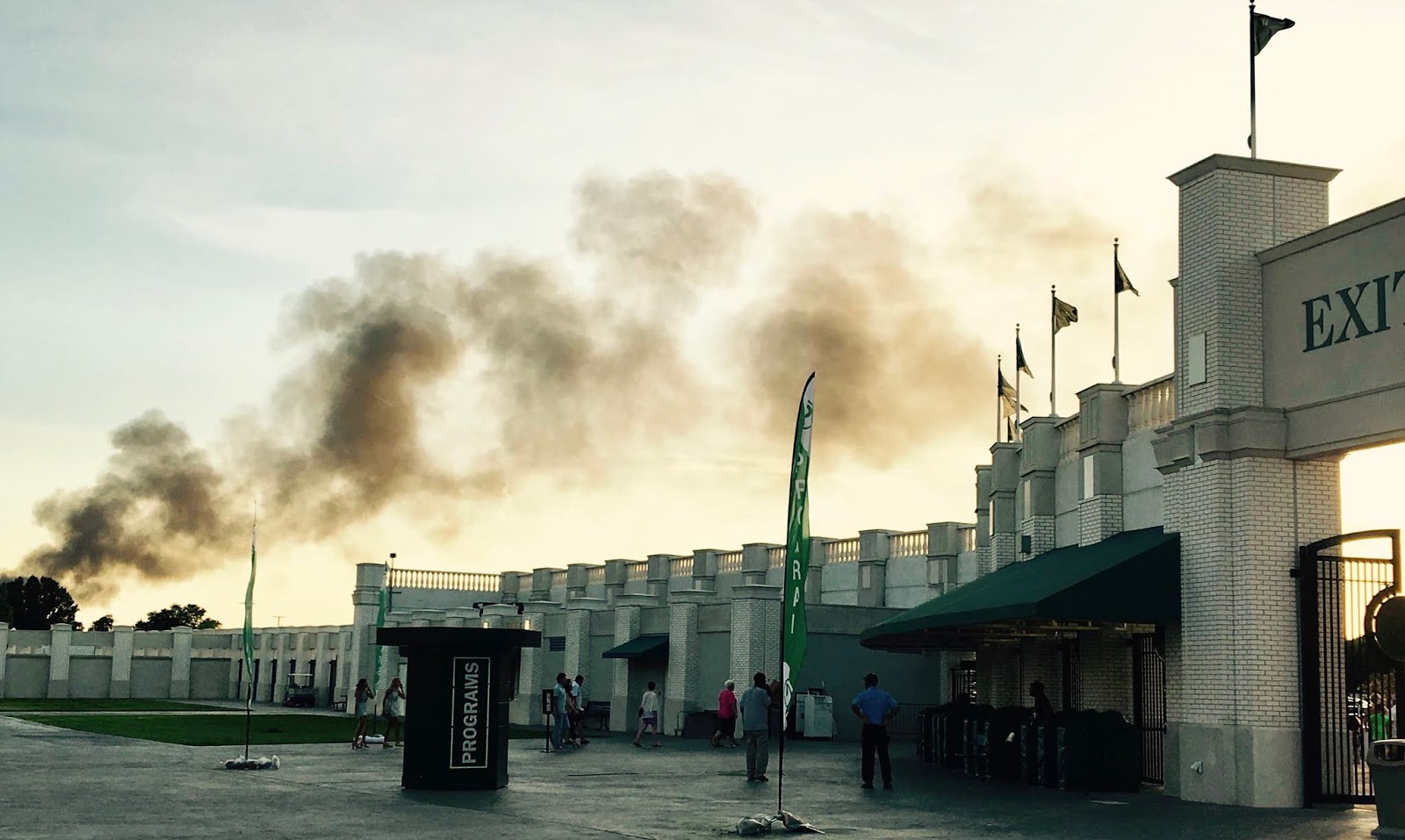
(Original image of smoke near the entrance of Churchill Downs by There Stands the Glass.)

Friday, May 15, 2020

Sempre Libera

I’ll have a ready answer if I’m ever asked how I spent the lockdown of 2020.  I’ve been immersed in opera.  I’ve watched more than 50 productions since the Metropolitan Opera began offering free daily streams in March.  I continue to bask in a new show every night.

I began the endeavor almost entirely from scratch.  I bought the least expensive ticket each of the seven or eight times I’ve attended an operatic production.  While they’re not legitimate substitutes for attending live events, the Met’s archived broadcasts offer closeups of the performers and tantalizing glimpses of the action backstage.  I studiously read the digital programs, consult outside materials and augment each production with supplemental listening sessions.

Even though it’s sometimes a slog, working my way through even the most tedious operas gives me a sense of purpose and fills the enormous void left by the moratorium on live music.  And the glacial pace, decadent length and over-the-top melodrama associated with the form suits the strained atmosphere of the quarantine.  I’ve come to adore opera’s disarming lustiness, high body count and vocal caterwauling.

The treasure trove of free streams allows me to admire the work of stars including Jessye Norman, Luciano Pavarotti and Leontyne Price, marvel at opera’s evolution from stationary belters to athletic vocalists and learn the context of popular arias like "Pagliacci"’s “Vesti la Giubba”.

I haven’t been at it long enough to cultivate a distinct sense of my personal taste, but I was moved by the striking modernity of Nico Muhly’s “Marnie”, stirred by Natalie Dessay’s ravishing portrayal of Violetta in Giuseppe Verdi’s “La Traviata” and floored by Anthony Dean Griffey acting in the title role of Benjamin Britten’s disturbing “Peter Grimes.”

A date once asked me what types of music I liked.  I told her that I loved “everything but opera.”  The trivial exchange stuck with me because I loathed myself for speaking out of ignorance.  I didn’t even know “Le Nozze di Figaro” existed.  Had I somehow been able to see and hear Cecilia Bartoli and Bryn Terfel perform Wolfgang Amadeus Mozart’s shockingly coarse work when I was a girl-crazy 17-year-old, my life might have turned out entirely differently.

(Screenshot of the Metropolitan Opera’s production of Richard Strauss’ “Capriccio” by There Stands the Glass.)

Tuesday, May 12, 2020

Rip It Up

The passing of Little Richard necessitates a second accounting of personal remembrances about several notable pandemic-era deaths.

Little Richard was always a part of my life.  Even though he was a country fan, my dad regularly referenced the Little Richard hits “Lucille” and “Good Golly Miss Molly”” when I was a tot.  While he wasn’t as towering a figure as Elvis Presley, Little Richard- along with Chuck Berry, Fats Domino, Buddy Holly and Jerry Lee Lewis- was an integral part of popular culture throughout my childhood.

I was surprised to discover Little Richard’s essential recordings for the Specialty label weren’t readily available when I began intentionally building a music library as a teenager.  I was obligated to buy a pricey British import.  The thick vinyl and sturdy packaging gave the album pride of place in my collection.

I acquired the faux autograph pictured above at a 2004 concert at the Austin Music Hall during SXSW.  Many people at the festival were nonplussed by Little Richard’s proselytizing, but I always understood his Saturday-night-and-Sunday-morning conflict was essential to the art of the legend who was the personification of rock and roll.  He died May 9.


---
I still haven’t processed the April 30 death of Tony Allen.  Just writing these words makes it too overwhelming to elaborate further.

---
I worked in a record store when What Up, Dog was released in 1988.  The contributions of Hillard “Sweet Pea” Atkinson convinced the entire staff to embrace the Was (Not Was) album.  I believe I last saw Atkinson perform as a member of Lyle Lovett’s band.

---
Disco innovator Hamilton Bohannon died April 24.

---
Richie Cole died May 1.  I saw the Charlie Parker acolyte perform once or twice.

---
I walked to Paris Blues from my AirBnb in Harlem 15 months ago.  The band was terrible, but the roadhouse vibe was sublime.  The joint’s founder and owner Samuel Hargess Jr. died April 10.

---
The threat of lawsuits forced me to delete two There Stands the Glass posts during the past 15 years.  One made a passing reference to a then-obscure rapper from Toronto.  The other documented a performance by “Bad Company” at a corporate party.  I showed up fully expecting to see Mick Ralphs.  I got Brian Howe instead.  The vocalist and his band were fine, but the host was incensed by my sardonic take.

---
Moraes Moreira’s obituary in The New York Times sent me down an extremely rewarding rabbithole.  The Brazilian’s astounding self-titled 1975 album combines MPB with classic rock.  Much of his earlier work with Novos Baianos is equally surprising.

---
My life partner and I still laugh about family and friends who maintain a steadfast allegiance to commercial country acts of the ‘70s and ‘80s.  These hitmakers were referred to with affectionate abbreviations like the Stats, the Oaks and the Gats.  I’d hear demands like “Cousin Bill, put on the Stats.”  We bonded while fondly goofing on Harold Reid’s bass singing on Statler Brothers lyrics like “smoking cigarettes and watching Captain Kangaroo” and “I’m in love with Mary Lou.”  Reid died last month.

---
Confession: I thought Kraftwerk was a novelty band throughout the 1970s heyday of the groundbreaking ensemble.  Kraftwerk cofounder Florian Schneider died last month.

---
I was too young to understand the mechanisms behind the push, but the Kansas City rock radio station KY-102 played Missouri’s “Movin’ On” to death in the late ‘70s.  I worked with a member of the band a few years later.  He refused to talk about the experience.  Ron West, another member of Missouri, died May 2.

---
I recognized the May 10 death of Betty Wright by marveling at concert footage of the soul hero’s dynamite performance in London in 1992.

(Original image by There Stands the Glass.)

Wednesday, May 06, 2020

Mal-icious

I communed with the spirits of three musicians the other night.  Mal Waldron, Reggie Workman, Billy Higgins and I met at a cosmic astral plane while my poor human body lay on the floor in an unlit room well after midnight.  The out-of-body experience facilitated by Up Popped the Devil was entirely unexpected.

I was inspired to play the obscure European release after reading a The New York Times feature about an outlandish record label’s plans to reissue one of Waldron’s albums for Prestige.  Knowing the pianist’s work from the ‘50s doesn’t interest me, I crassly opted for the 1973 session based on its odd album title and excellent cover art.

The trio’s hypnotically transportive playing stunned me.  How could I not have known about Waldron’s two radically distinct careers?  I’ve since learned that he had a mental breakdown in 1963.  The music Waldron made after the trauma is just as idiosyncratic and almost as innovative as the work of Thelonious Monk and Cecil Taylor. 

Waldron explains his approach in the illuminating documentary “A Portrait of Mal Waldron”.  He says “when I play piano I’m trying to find things... it’s always a constant search.”  As Waldron’s newest convert, I’ve joined his search party.  My initial exploration into his dozens of late-career albums- including the maiden voyage of ECM Records- has just begun.  Hours of ecstatic delirium await.

(Original image by There Stands the Glass.)

Monday, May 04, 2020

There Are Other Worlds (They Have Not Told You Of)

The quarantine soundtrack at my compound has gone sideways.  Much to the chagrin of my lockdown partner, harsh music dominates my recent playlist.  The noise-induced epiphanies I’ve experienced remind me of the final track on Sun Ra’s Lanquidity.  I couldn’t deal with “There Are Other Worlds (They Have Not Told You Of)” when I bought the album as a new release in 1978.  Only now do I realize the song was an exhortation from the future.  Diligent autodidactic training during the subsequent 42 years finally allows me to expertly appraise and fully appreciate new music by Lil Baby and Martin Bresnick and old works by the likes of Mal Waldron and Alexander Borodin.


---
I’m the primary contributor (the emojis aren't mine) to KCUR’s Adventure newsletter about locally based musicians’ entries in the Tiny Desk Contest.

---
I call out Kansas City’s cultural provincialism in a Plastic Sax post.

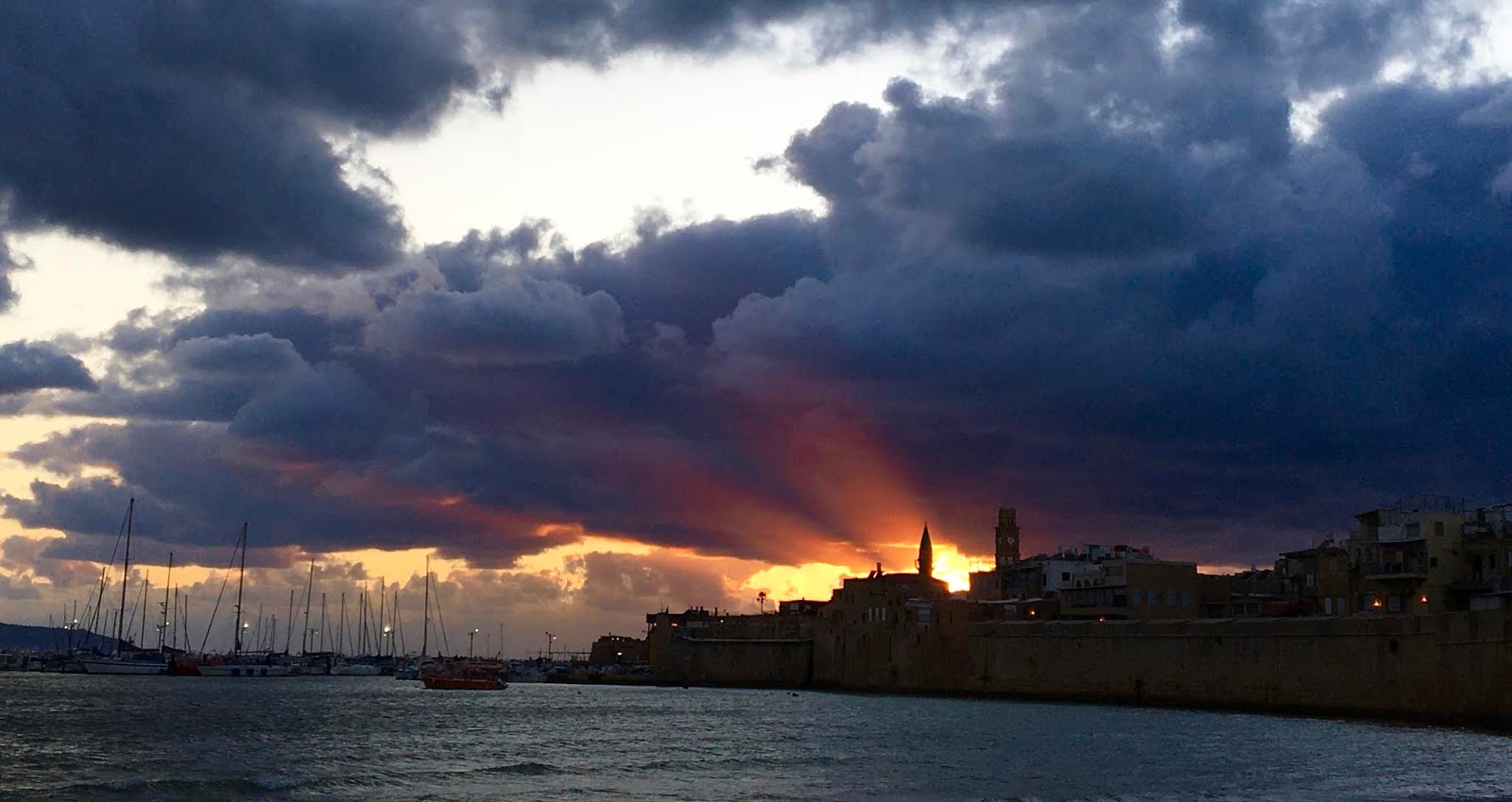
(Original image of a Mediterranean sunset in Acre by There Stands the Glass.)

Wednesday, April 29, 2020

April 2020 Recap: A Monthly Exercise in Critical Transparency

Top Five Albums
I’m glad so many people claim to love Fiona Apple’s Fetch the Bolt Cutters.  I’m not among them.

1. Peter CottonTale- Catch
My review.
2. Clarice Jenson- The Experience of Repetition as Death
My review.
3. Dvsn- A Muse In Her Feelings
A not so quiet storm.
4. Tomeka Reid and Alexander Hawkins- Shards and Constellations
My review.
5. Laura Marling- Song For Our Daughter
Both sides now.

Top Five Songs
Even better than my beloved’s halting piano recitals.

1. Frank Ocean- “Dear April”
Vital correspondence.
2. Zsela- “Drinking”
In the parlance of the moment, I feel seen.
3. Playboi Carti- “@meh”
Modern art.
4. The Streets and Tame Impala- “Calling My Phone Thinking I’m Doing Nothing Better”
I don’t know how to dismiss an incoming call either.
5. Earl Sweatshirt featuring Maxo- “Whole World”
My favorite iteration of Earl.

Top Five Livestreams
I continue to appreciate nightly opera productions thanks to the generosity of the Metropolitan Opera.

1. Daniel Barenboim- plays Chopin at Pierre Boulez Saal
2. Post Malone- plays Nirvana at home
3. Stacey Pullen- in Detroit
4. Boombox Cartel- Room Service Festival
5- Taylor Swift- One World: Together at Home

I conducted the same exercise in March, February and January.

(Screenshot of the Metropolitan Opera’s production of Rossini’s Cenerentola by There Stands the Glass.)

Monday, April 27, 2020

It Takes Two

I’m infatuated with a trio of new duo recordings by masters of improvised music.  Less is indeed more on these masterful musicians’ spare demonstrations.  Their controlled chaos reflects the epoch of uncertainty.

Martial Solal and Dave Liebman- Masters In Paris
How is it possible that a man born in Algeria in 1927 is among the most inventive pianists working in the new millenium?  Eighty-eight years old when this session with the storied saxophonist Dave Liebman transpired in 2016, Solal made a case for being the best pianist alive on inventive readings of standards.  “Coming Yesterday,” the Solal composition closing the live set, sounds just as essential as the more familiar material.  Here’s
video evidence of the sorcery.

Tomeka Reid and Alexander Hawkins- Shards and Constellations
The seemingly ubiquitous cellist Tomeka Reid is among my favorite musicians of the moment.  She and the British pianist  Alexander Hawkins pair well on thrilling free-range explorations.  Skronk-averse listeners are encouraged to begin with the sublime “Peace on You.”

James Taylor Lewis and Chad Taylor- Live in Willisau
Saxophonist James Taylor Lewis and drummer Chad Taylor achieve a propulsive sense of forward momentum during their vigorous appearance at a Swiss avant-garde jazz festival.   They leave no room for piano or bass.


---
I review Jackie Meyers’ new album Clementine at Plastic Sax.

(Original image by There Stands the Glass.)
Friday, April 24, 2020

Comfort Items

I’m bewildered when pals proudly share current playlists consisting of nothing but dusty vinyl albums.  To each his own, but discovering innovative new sounds is my lifeblood.  I prize surprise.  Even my ongoing opera obsession during the quarantine is rooted in enlightenment.  Last night I learned I loathe Franz Lehár’s “The Merry Widow.”  I’m disappointed, consequently, by my recent regression into the sort of sentimentality I mock in my friends.

I was lying half-naked in the sun on the nicest day of the year when I first listened to Shelby Lynne’s new self-titled album.  Complemented by the warm sun and cool breeze, Lynne’s barely-concealed recasting of her classic 1999 album I Am Shelby Lynne elevated me to cloud nine.  Subsequent plays revealed Shelby Lynne to be as innovative as a McDonald’s combo meal.  That’s precisely why I adore it.

After catching Lionel Loueke’s show with bassist Massimo Biolcati and drummer Ferenc Nemeth at the Blue Room in 2009, I figured the guitarist could do no wrong.  His 2012 album Heritage met the high standard I set for the artist who blends rock, soul and jazz with West African dance music.  Since then, his previously hidden propensity for corniness has repeatedly disappointed me.  Gilfema’s Three, Loueke’s reunion with Biolacati and Nemeth, is a familiar and comforting return to form.  Here’s the trio’s interpretation of “Little Wing”.

Jazz Is Dead’s name implies a revolutionary sensibility, but the project overseen by Adrian Younge and Ali Shaheed Muhammad specializes in painstakingly accurate recreations of timeworn variations of jazz.  Released today, the Roy Ayers vehicle “Synchronize Vibrations” is a nostalgic update of the cosmic soul of Ubiquity’s “Everybody Loves the Sunshine.”  Alas, I’m smitten by the blast from the past.

(Original image by There Stands the Glass.)

Monday, April 20, 2020

Album Review: Peter CottonTale- Catch

My life partner feared I might succumb to Jerusalem syndrome during our trip to Israel three months ago.  She was relieved by the absence of unhinged surges of spiritual intensity during our ecumenical pilgrimage to holy sites.  The ecstatic mania she expected me to exhibit at the Church of the Holy Sepulchre manifested in my living room on Friday night as I listened to Peter CottonTale’s Catch.  Not only does Jesus save, the new music He inspired interrupted my obsessive bingeing of devilish ambient music.

My profound appreciation of the gospel recording isn’t surprising.  Its tone and personnel parallel my top album of 2019 (Jamila Wood’s Legacy! Legacy!) and my #2 album of 2016 (Chance the Rapper’s Coloring Book).  I adored performances by Peter CottonTale’s collective at a pair of Chance the Rapper concerts in Kansas City and in a star-studded performance by The JuJu Exchange at the Chicago Jazz Festival last year.

I anticipate finding inspiration in vital hymns like “Hi 5,” “Feels Like Church” and “Pray for Real” for the remainder of my life.  The joy-imbued Catch is a vigorous representation of the optimism at the core of my faith.  Aside from the inclusion of a brief skit, my sole grievance is the brevity of the selections.  Songs fade out moments after my delirious convulsions begin to kick in.


---
I report on the results of the American Jazz Museum’s Charlie Parker Song Contest for KCUR.

---
I review the Cur3’s The Anecdote at Plastic Sax.

(Original image of the Church of the Holy Sepulchre in Jerusalem by There Stands the Glass.)

Tuesday, April 14, 2020

It Ain’t Over 'til the (Talented) Lady (Stops) Sing(ing)

Even after finally managing to cross attending a performance at the Metropolitan Opera House at Lincoln Center off my bucket list in January of 2019, I never could bring myself to pony up $25 to watch recorded versions of the institution’s new opera productions at a nearby movie theater.  Not only are the tickets expensive, I’m constitutionally incapable of sitting still as images flicker across a screen.

I finally know what I’ve been missing.  The Metropolitan Opera offers a different free video stream of its cinematic productions every 24 hours during the ongoing lockdown.  (Donations are requested.)  Indulging in the benevolent gesture changed the tone of my quarantine. 

I could only afford a ticket in the nethermost tier of the Metropolitan Opera House to take in the double bill of “Iolanta” and “Bluebeard’s Castle” in New York City last year.  The filmed versions place the viewer in the front row and behind the scenes during set changes and between each act.  I was especially grateful for the clear vantage points that allowed me to admire Anna Netrebko in her starring role as Norina in a 2010 production of “Don Pasquale” on Saturday.

Now that I’ve learned how to insulate my laptop in ice packs to prevent overheating during the lengthy, data-heavy performances, I know I’ll be able to watch all of “Boris Godunov” tonight, and more importantly, Netrebko’s 2019 star turn in “Adriana Lecouvreur” on Saturday.


---
It’s not all opera and ambient noise in my retreat.  I list my ten favorite jazz albums of 2020 (so far) at Plastic Sax.

---
Apropos of nothing, here’s a reminder of Brad Mehldau’s brilliance.

---
Nostalgic fans of gentle folk-rock of 1970s artists like Christine McVie, Joni Mitchell and Nick Drake will be beside themselves when they catch up with Laura Marling’s exceedingly lovely Song For Our Daughter

----
Dream team!  Kevin Parker and Mike Skinner combine forces on “Call My Phone Thinking I’m Doing Nothing Better”.

(Original image of Anna Netrebko on my television by There Stands the Glass.)

Sunday, April 12, 2020

Album Review: Clarice Jensen- The Experience of Repetition as Death

I didn’t mention Max Richter’s surprisingly humble demeanor in my review of his splendid concert in Austin last year.  He may be one of the most respected composers of the 21st century, but Richter possesses a sheepish stage presence.  Clarice Jensen, however, led Richter’s accompanists with dramatic flair.

Jensen’s new album The Experience of Repetition as Death is correspondingly suspenseful.  The ambient recording would convey a sense of inconsolable devastation even in the best of times.  Experienced during the current global crisis, The Experience of Repetition as Death provides the quintessential soundtrack for dread-imbued isolation.

The Experience of Repetition as Death,  Jóhann Jóhannsson’s apocalyptic posthumous album Last And First Men and the slow burn of Nine Inch Nails’ astoundingly impactful Ghosts VI: Locusts and its slightly less gripping companion Ghosts V: Together make up the most meaningful- albeit jarring and disconcerting- portion of my current discretionary listening. 

I attempted to lighten my mood by blasting a playlist featuring hits by the likes of E-40, Pusha T and Nicki Minaj during a run for provisions a couple days ago.  I felt like an idiot.  Until all this is behind us, I’ll be brooding right here.


---
I was never entirely smitten by a Hal Willner production, but I’ll always be grateful to the eclectic gadfly.  I was unfamiliar with Nino Rota and Kurt Weill until his tribute albums brought the giants to my attention in the 1980s.  Willner died April 7. 

---
I can only assume the people praising Yves Tumor’s Heaven to a Tortured Mind are also big fans of Godsmack.  The difference between the commercial metal band and the critically acclaimed artist is marginal on his new album.  The tired playlists of active rock radio stations would be much more interesting if they featured Tumor songs like “Gospel For a New Century” between tracks by Stone Temple Pilots and Tool.

---
I returned to the 1970s catalog of Norman Connors upon learning of the April 6 death of keyboardist Onaje Allan Gumbs.  The cosmic jazz of Love From the Sun has aged exceedingly well. 

(Original image of downtown Austin by There Stands the Glass.)

Wednesday, April 08, 2020

I Bought the Rights to the Inside Fights

The death of John Prine compels me to divulge an anecdote I’ve kept entirely to myself for 38 years.  I never had much in common with my friend A.  Jimmy Buffet’s Volcano was his favorite new album when we met in 1979.  I was obsessed with Off the Wall.  A. loved marijuana.  I’ve always detested the drug.  He wore Hawaiian shirts.  I prefer black clothing.  Yet we bonded over our mutual love of John Prine.

It was only natural we found ourselves at a nightclub’s peculiar double bill of Prine and the Righteous Brothers in 1982.  The young women we met after Prine’s opening set danced with us during renditions of the classic slow jams “Unchained Melody” and “You’ve Lost That Lovin’ Feeling.”  I once thought making out with one of the strangers on the dance floor was the highlight of the night.  Only now do I fully appreciate the inestimable value of seeing Prine in the company of A.  He died in a car accident a few weeks later.  He was 19.

I rarely thought of A. when my work as a sales rep for independent record labels brought me into the tumultuous orbit of Prine’s in-house record label.  To put it mildly, I had a rocky relationship with the business manager of Oh Boy Records.  (My antagonist died in 2015.)

The bitter conflicts never diminished my passion for Prine’s work.  “Illegal Smile,” the first track on Prine’s 1971 debut album, was among A.’s favorite songs.  Yet it’s three lines from “Flashback Blues,” the album’s closing selection, that contain particular resonance today: Cloudy skies and dead fruit flies/Waving goodbye with tears in my eyes/Well, sure I made it, but you know it was a hell of a trip.


---
I decry the indifferent reception of Rock Chalk Suite among Jayhawk fans at Plastic Sax.

(Original image by There Stands the Glass.)

Monday, April 06, 2020

They Decorated My Life

After a longtime friend derided There Stands the Glass as a “death blog” a few years ago, I made the conscious decision to stop acknowledging the passing of every prominent musician.  The furious spate of recent bad news compels me to return to the gloomy format to lament several recent fatalities.

Cristina Monet-Zilkha
The no wave/new wave musician Cristina is among the peripheral artists who were once the momentary focus of my attention.  Shamefully, I’d completely forgotten about her.

Manu Dibango
I like to think I already know everything, so I was flabbergasted to have never made the connection between Manu Dibango’s global 1972 hit “Soul Makossa” and Michael Jackson’s “Wanna Be Starting Something” until I read one of Dibango’s obituaries.  Other than hearing “Soul Makossa” on the radio as a child, the only music of Dibango’s I’d spent time with is Electric Africa, his mind-boggling 1985 album for Celluloid Records.

Joe Diffie
Joe Diffie’s biggest hits sounded like holdovers from the ‘80s.  While he was never as good as John Anderson or Randy Travis, Diffie made markedly better music than the majority of his hit-making peers in the ‘90s.

Genesis P-Orridge
Wendy Carlos and Genesis P-Orridge introduced me to the concept of gender fluidity, but unlike Carlos’ work, the music GP-O made with Psychic TV and Throbbing Gristle never grabbed me.

Jan Howard
I was so floored by seeing Roy Acuff in person to appreciate much else at the time, but my first trip to the Grand Ole Opry in the late ‘80s turned out to be a big moment in my concert-going career.  In addition to taking in sets by the likes of Little Jimmy Dickens and Skeeter Davis, it was the only time I witnessed Jan Howard perform.

Aurlus Mabele
I’m so grateful for the African music scare of the ‘80s and ‘90s.  Attending shows by groups like Aurlus Mabele’s Loketo in American clubs changed my life.

Ellis Marsalis
I’d be lying if I pretended to have been captivated by Ellis Marsalis’ concerts and albums, but what a legacy he left!

Krzysztof Penderecki
Embarrassing confession: I first sat down to intentionally focus on the composer’s “Threnody for the Victims of Hiroshima” last year.  The London Philharmonic Orchestra’s new release Penderecki: Horn and Violin Concertos was in my queue when Penderecki passed.

Kenny Rogers
You’d think I would have detested Kenny Rogers and everything he represented.  What a cornball!  Yet my heart never allowed my head to have its way.  Even though my dad died more than 20 years ago, I can still hear him bellowing “Lucille” like a drunken sailor.  And Rogers charmed me each of the several times I saw him perform.

Wallace Roney
In many ways, Roney’s discombobulated career exemplifies the plight of jazz during the past 40 years.

Adam Schlesinger
Hours after learning of Schlesinger’s death, the loud renditions of Fountains of Wayne’s “Stacy’s Mom” on repeat in my memory banks kept me up half the night.

Eric Taylor
Eric Taylor isn’t the only musician who pledged to kill me, but the singer-songwriter’s oath was one of the most believable of the several murderous threats I’ve received.  Here’s the story.

Bill Withers
My relationship with the music of Bill Withers is tainted by overexposure.  Excruciating renditions of “Lean On Me” by countless children’s choirs and innumerable hack jobs of Withers hits including “Use Me” and “Ain’t No Sunshine” tortured me in churches, jazz clubs, blues joints and hotel lounges.

(Original image by There Stands the Glass.)

Tuesday, March 31, 2020

March 2020 Recap: A Monthly Exercise in Critical Transparency

My memories of the concerts I attended during the first week of March seem like implausible fever dreams.

Top Five Performances
1. Luciana Souza, Chico Pinheiro and Scott Colley- Folly Theater
My review.
2. The Pavel Haas Quartet with Boris Giltburg- Folly Theater
My review.
3. Bill Frisell’s Harmony- Nelson-Atkins Museum of Art
My review.
4. Stephen Martin’s 5529 jam session- 5529 Troost
My Instagram clip.
5. Nick Schnebelen- Uptown Theater
The blues-rock stalwart almost upstaged headliner George Thorogood.

Top Five Albums
1. Jay Electronica- A Written Testimony
My review.
2. Childish Gambino- 3.15.20
My review.
3. J Balvin- Colores
In spite of everything, spring is here.
4. Hailu Mergia- Yene Mircha
Life itself.
5. Nicolás Jaar- Cenizas
Dark shadows.

Top Five Songs
1. Duck Sauce- “Captain Duck”
Wot.
2. Bob Dylan- “Murder Most Foul”
Jukebox hero.
3. Meredith Monk- “The Games: Downfall”
Hee-haw.
4. Aoife O’Donovan- “Bull Frog’s Croon: iii. Valentine”
I feel like going home.
5. Run the Jewels featuring Greg Nice and DJ Premier- “Ooh La La”
Gangstarrs.

I conducted the same exercise for Feburary and January.

(Original image of Stephen Martin’s jam session by There Stands the Glass.)

Thursday, March 26, 2020

Album Review: Childish Gambino- 3.15.20

I was among the millions of Prince fans who rushed to record stores on Tuesdays to buy the nine albums he released in the 1980s.  Alternately hedonistic and apocalyptic, the communal soundtrack was admirably adventurous and challenging.

Childish Gambino’s 3.15.20 is a splendid evocation of that era.  While the musician born Donald Glover isn’t as innovative as Prince, his ingratiating references to the vintage sounds of Cameo, George Clinton, Marvin Gaye, Sly and the Family Stone and Prince are balanced by astute allusions to Frank Ocean and Kanye West.

3.15.20 is an invigorating reminder that not everything is awful.  Arriving nine days after Jay Electronica’s essential A Written Testimony, 3.15.20 is the second classic album of the coronavirus era.


---
I yakked about Kansas City artists including Deborah Brown, Julia Lee, Marilyn Maye and Mary Lou Williams on an episode of 90.9 The Bridge’s Eight One Sixty.

---
I reviewed Eldar Djangirov’s Rhapsodize at Plastic Sax.

(Original image by There Stands the Glass.)
Saturday, March 21, 2020

Pandemic Playlist

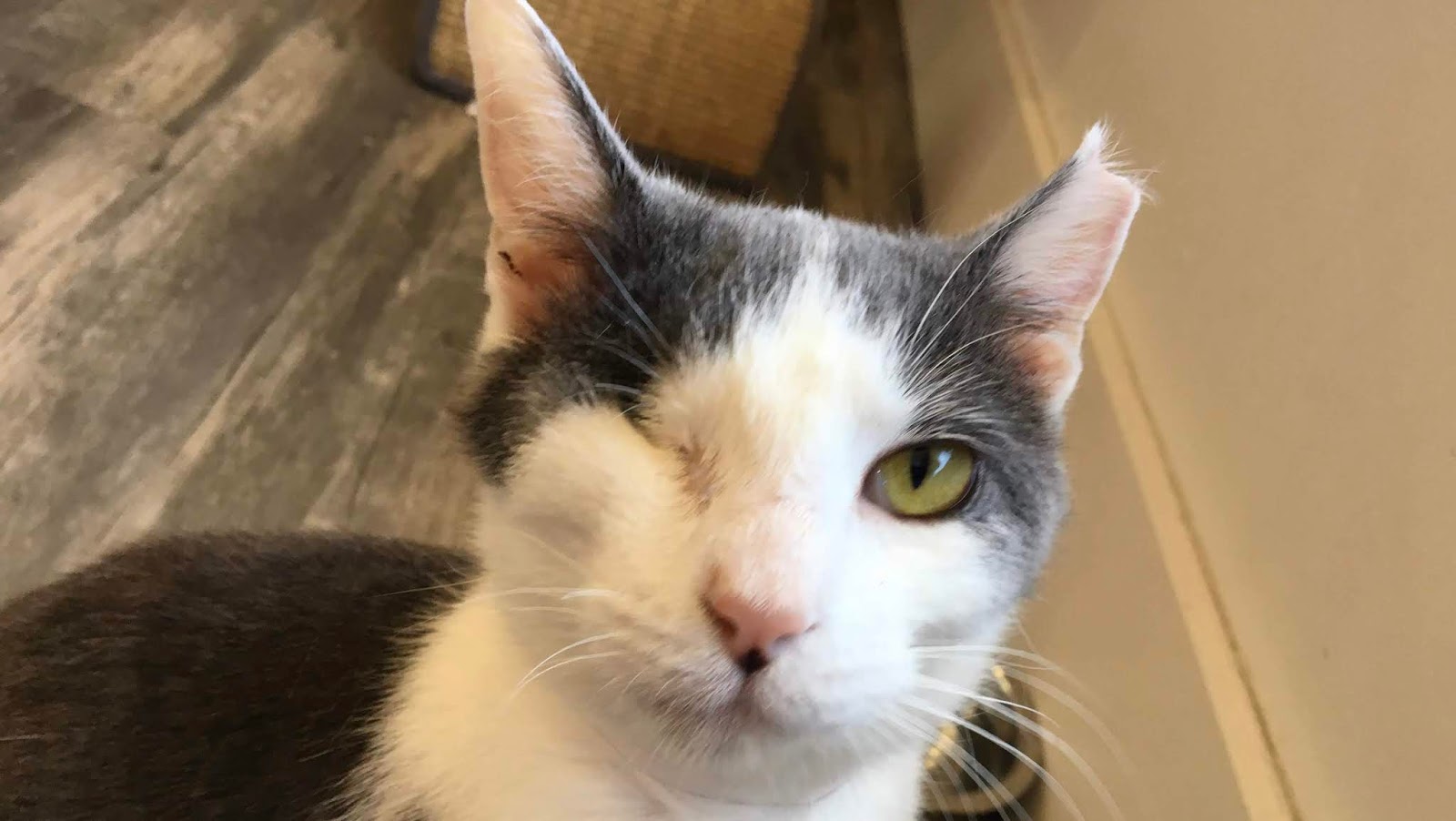
I was awakened by a helicopter hovering over my home at 1:50 a.m. last night.  At least I think I was.  I’m no longer confident in my capacity to distinguish dreams from reality.   The tone and/or the lyrics of each track on my two-hour pandemic playlist reflect the circumstances.  Please wake me when it’s over.


(Original image of cat by There Stands the Glass)

Saturday, March 14, 2020

Album Review: Jay Electronica- A Written Testimony

What a time we living in/just like the scripture says/earthquakes, fires, and plagues/the resurrection of the dead.- Jay Electronica’s “The Neverending Story”

A Written Testimony couldn’t be timelier.  The long-awaited arrival of an official Jay Electronica album clocks in as much of the world’s population confronts calamity.  Everything about A Written Testimony hits home.  Because I maintain an (intermittently) halal household and regularly visit mosques, I don’t blink at the album’s foundation in Islam.  Still mourning a December death, I appreciate the spiritual meditations on the 39-minute recording.  As someone with suddenly precarious employment prospects, I share the artist’s skepticism of several of our shared institutions.  The bleak A Written Testimony provides an entirely apropos soundtrack for this pivotal moment.

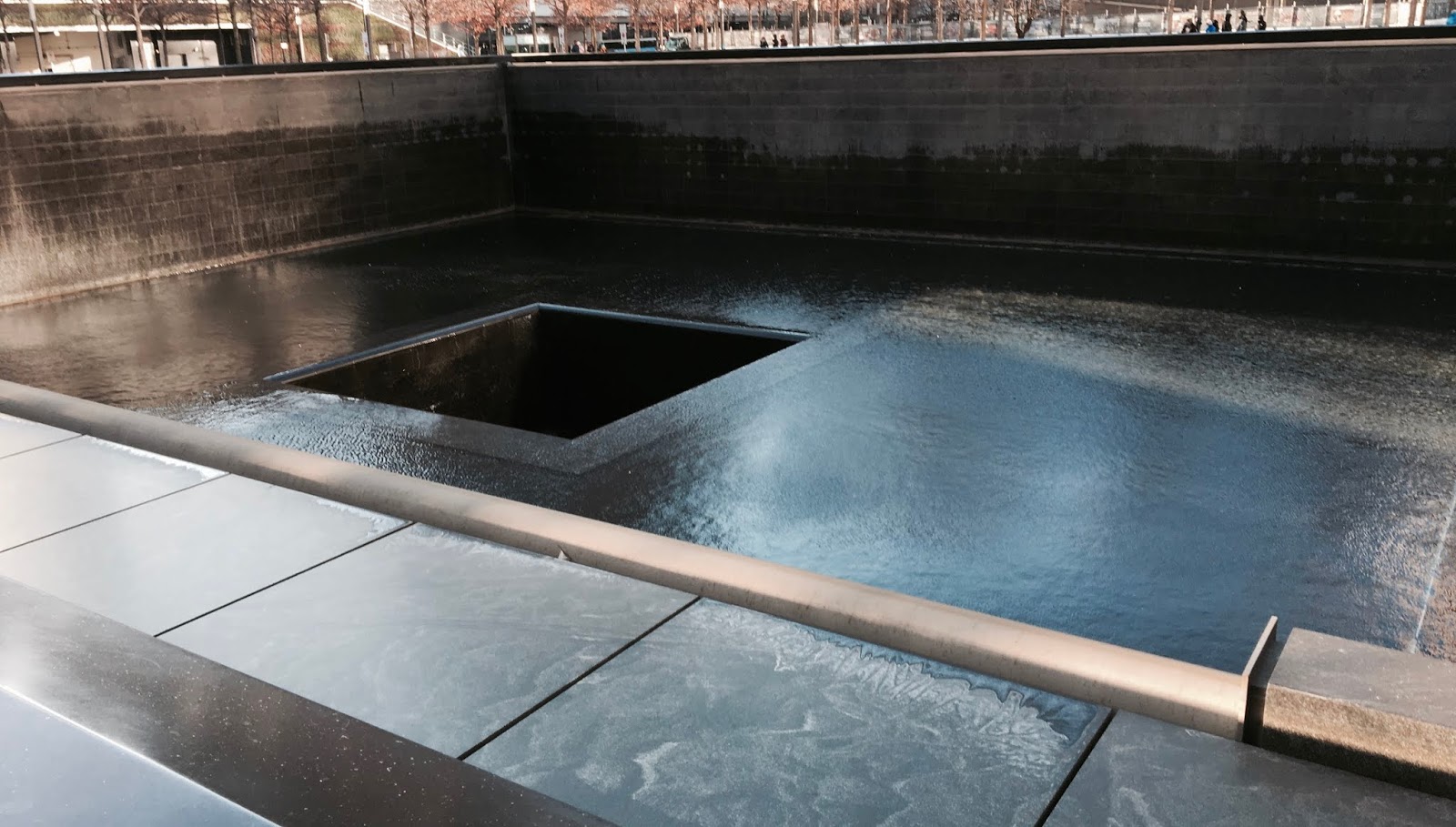
(Original image of the 9/11 Memorial in Manhattan by There Stands the Glass.)

Friday, March 13, 2020

Album Review: R.A.P. Ferreira- Purple Moonlight Pages

Most jazz-based vocalese is unlistenable drek.  Jazz poetry is even worse.  Yet as the cool kids hyperventilate to Shabaka and the Ancestors’ entirely adequate new spiritual jazz album We Are Sent Here By History, I’m obsessed with R.A.P. Ferreira’s Purple Moonlight Pages.   Backed by the faux-jazz band Jefferson Park Boys, the rapper formerly known as Milo avoids the pitfalls of the form by applying a hip-hop sensibility and a protective cloak of ironic detachment to rhythmic poetry.  Smart and funny, Purple Moonlight Pages’s simultaneous evocation of Nas and Thelonious Monk is rarely corny.  My fingers involuntarily snap when Ferreira raps lines like “whisper-singing Nelly Furtado/wishing I was a Yardbird/plastic saxophone/ashy metronome.”  Although the songs are among the album’s weakest tracks, Ferreira created videos for “Doldrums” and “Leaving Hell”.

(Original image by There Stands the Glass.)

Wednesday, March 11, 2020

Expense Ratios

I’m a value investor.  I relish taking advantage of market anomalies in stocks as well as in goods ranging from albums to airline tickets.  Operating as an adaptable music obsessive in Kansas City means it’s impossible to uncover attractive deals on admission to concerts by stars like Lil Uzi Vert, but bargains abound for ostensibly highbrow performances.

The highlight of my stingy concertgoing career may always be nabbing a deeply-discounted front-row ticket to a 2012 Philip Glass concert for $30.  Even so, I’m inordinately pleased to have spent a measly $20 (plus a $4 dollar service fee) to see the jazz giant Bill Frisell last week.  (My review at Plastic Sax).

I’ve also been living high on the hog due to market aberrations for chamber music at the Folly Theater.  Spending $35 on a front-row seat for a concert by the revered chamber orchestra Akademie für Alte Musik Berlin allowed me to live like a Prussian monarch for two hours on February 21.  I pondered palace intrigue while basking in the rarified sound of unamplified period instruments.

The wondrous experience compelled me to buy another $35 front-row ticket for a concert by the Pavel Haas Quartet featuring pianist Boris Giltburg on March 6.  As the embedded photo of the string quartet’s Veronika Jarůšková and Giltburg indicates, I was so close to the action that I couldn’t capture the entire ensemble in a single frame.  As much as I’ll always love “XO Tour Lif3”,  the chamber music concert transformed me in a way an Uzi performance can not.  Watching Giltberg wrestle with Rachmaninoff’s “Études-tableaux”- (more or less exactly like this)- from a distance of ten feet allowed me to finally grasp the appeal of the composer’s work.

The jazz inflections in a contemporary piece by Ľubica Čekovská reminded me of Anthony Davis (this AD) compositions while the ensemble’s vital take on String Quartet No. 9 in C major made it seem as if Beethoven should be celebrating his 50th rather than his 250th.  Even though I didn’t enjoy a 45-piece Dvorak nearly as much, I walked out of the Folly Theater a changed man.  Eternal Atake resonated differently on my drive home.

I’ve saved the best for last.  I lamented the necessity of passing on Daniil Trifonov’s March 12 concert.  Tickets were far too rich for my blood.  But less than five minutes after receiving an email notification from the presenter offering remaining seats at a eighty-percent discount, I owned a fourth-row center ticket to hear the one of the most celebrated pianists in the world for a price of just $20.50.  I trust Uzi admires my investment acumen.


---
I make weekly concert recommendations for The Kansas City Star.

(Original image by There Stands the Glass.)